It’s not uncommon to see butterflies fluttering gracefully in the garden or meadow, but did you know that some cultures actually consume them as a delicacy? While it may sound strange and unconventional, eating butterflies is more common than you might think.
Eating butterflies may sound like a delicious treat, but you should think twice before doing so. Some Butterflies species are edible and safe for consumption, however, many of these insects consume plants that are toxic to humans. Eating monarch butterflies in particular can result in immediate poisoning.
In this article, we’ll explore the facts, myths, and rumors around consuming butterfly species. We’ll discuss what happens if you eat them, what they taste like, which ones are edible and if they pose any health risks to humans. So let’s dive in and get an informative look into the culinary possibilities of these beautiful creatures!
Disclaimer!
This article is meant for informational purposes only and should not be taken as medical advice. Always consult a healthcare provider or nutritionist before consuming any wild or unfamiliar foods. Additionally, never eat any butterfly species listed as endangered on any list of threatened species as this is illegal and might be punishable by law according to your state.
Can you Eat Butterflies?
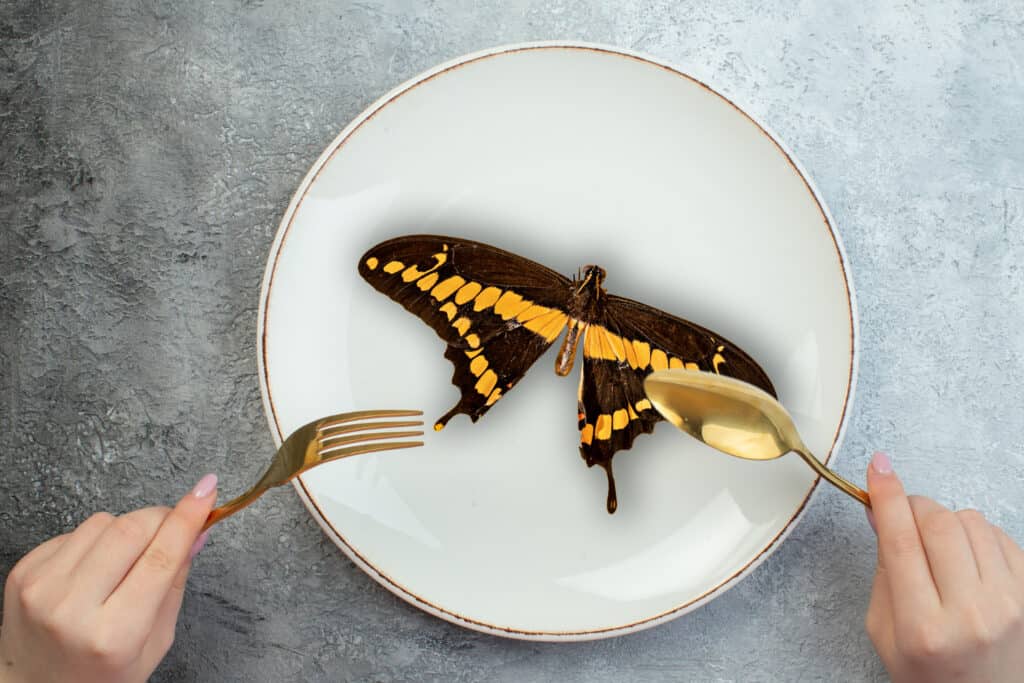
It is a question that many people ask, especially when seeing them fluttering around on a warm summer day. The short answer is no, it’s not recommended to try and consume butterflies.
The first issue with eating butterflies is the unpleasant taste. Butterflies generally don’t have a lot of flavor, so there wouldn’t be much satisfaction in eating them.
The bigger problem stems from the fact that they are difficult to digest. Their wings and bodies are composed of materials that can be quite hard for the human digestive system to break down. In addition, the toxins in their wings can be harmful – possibly leading to an upset stomach or worse if ingested.
Lastly, even if you were somehow able to successfully swallow them, butterflies being eaten would quickly deplete populations in areas where they are already endangered. This would further reduce the biodiversity in our fragile ecosystems and would lead to other species going extinct as well.
While it may seem like an interesting idea it is not advisable to eat butterflies due to health concerns as well as potential consequences for the environment!
What happens if you eat butterflies?
Eating butterflies has become an increasingly popular trend over the last few years, but it is important to remember that not all species of butterfly are safe for human consumption. Many varieties of butterfly and moth contain toxins, some of which can be poisonous if ingested.
The Monarch butterfly is a particularly toxic species, with its toxin coming from the sap of certain plants, especially milkweed. Consumption of this species can cause rapid poisoning. Other non-Monarch butterflies may also contain toxins, making them unsuitable for human consumption.
Fortunately, there are some edible types of butterfly available. These are mostly moths and caterpillars rather than adult butterflies. However, these should only be eaten under strict supervision; they must be prepared by an expert in order to make sure that any potential toxins or other harmful bacteria are eliminated.
In addition to ensuring safety through preparation, it is important to remember that many species of butterfly are considered endangered or at risk of endangerment due to habitat loss and other threats. Eating these endangered species can further put them at risk, so it is essential that such practices should be avoided by responsible individuals.
What does a butterfly taste like?
People are captivated by the colorful wings and beauty of butterflies, but many would be surprised to learn that their taste rarely lives up to expectations. Butterflies typically possess little nutritional value for humans, with some species even having a slightly unpleasant or bitter flavor.
Nectar from flowers or sap from trees make up the diet of most butterflies, resulting in it containing mostly sugar and water with few valuable nutrients. Despite some species reportedly possessing a pleasant taste, the majority range from having no reminiscence of flavor to being bland or slightly bitter. Therefore, while they may be an interesting addition to a decorative dish, butterflies offer very little in terms of sustenance.
What butterflies are edible?
Eating butterflies is a popular delicacy in some Asian countries, and it is possible for humans to consume them safely when done so responsibly. When choosing edible butterflies, those that don’t consume toxic plants like milkweed are preferable. Additionally, any species listed as endangered should be avoided as it is illegal to eat them.
Examples of toxic butterflies include Monarchs, Eastern Black Swallowtails, Viceroys, American Coppers, Tailed Blues, Spring Azures and Clouded Sulphurs. Eating these varieties could lead to a nasty stomachache at best or more serious consequences at worst, so research should always be done beforehand to verify the safe consumption of this unique dish.
What country eats butterflies?
In many parts of the world, butterflies are considered to be a delicacy. From Mexico to Brazil, Ghana to Thailand and China, these colorful creatures have caused quite a culinary stir among some cultures.
In North-eastern China, there is a very interesting phenomenon – restaurants around cities often feature large square containers filled with butterfly or moth larvae in the chrysalis stage of development. If you’re feeling adventurous on your dinner date, you can order a dish with chrysalis right off the menu.
Surprisingly though, not many people choose to take up this option despite its availability. It seems that while they are intrigued by the strange dish, their unfamiliarity with it leads them to shy away from it. To be sure, it is novel and exciting to see a restaurant that has such an exotic offering but whether one should indulge or not remains a mystery.
Are butterflies poisonous to humans?
Some butterfly species, such as the monarch and viceroy, feed on toxic plants and retain the toxins in their bodies. This makes them a valuable defense against predators like birds, but it also means that, while they are not dangerous to humans directly, their toxicity can still be transferred when handled or consumed. As a result, some cultures have shied away from consuming butterflies due to potential risks associated with their large surface areas in contact with plant materials.
However, it is important to note that there is no scientific evidence linking butterflies with any significant negative effects on humans or large animals. Butterflies live mostly harmless lives outside of being eaten by other animals — eating them is usually a matter of personal choice rather than a health hazard.
Conclusion
In conclusion, eating butterflies is possible but should be done with caution. It’s important to research the species you plan on consuming and make sure it isn’t endangered or toxic. Many cultures around the world consider them a delicacy, so if you’re feeling adventurous and are looking for new culinary experiences, give butterfly dishes a try! However, while they may offer an interesting addition to your plate in terms of texture or flavor, their nutritional value will ultimately remain limited. As such, don’t expect any significant health benefits from indulging in these colorful creatures.
FAQ
Q: Are butterflies edible?
A: Yes, it is possible to eat butterflies as long as they’re not of a toxic species like the Monarch or Viceroy. Additionally, any species listed as endangered should be avoided as it is illegal to eat them.
Q: What country eats butterflies?
A: Eating butterflies is a popular delicacy in some countries around the world including Mexico, Brazil, Ghana, Thailand and China. In North-eastern China, there are restaurants that feature butterfly larvae on their menus.
Q: Are butterflies poisonous to humans?
A: Some butterfly species feed on toxic plants and retain the toxins in their bodies which can be transferred when handled or consumed. However, there is no scientific evidence linking butterflies with any significant negative effects on humans or large animals. It’s important to research the species you plan on consuming and make sure it isn’t endangered or toxic.
Q: Are butterflies nutritious?
A: While butterflies may offer an interesting addition to your plate in terms of texture or flavor, their nutritional value will remain limited. As such, don’t expect any significant health benefits from indulging in these colorful creatures.
Recent Posts
How Can I Create A Habitat For Skipper Butterflies In My Garden With 3 Easy Plants
Skipper butterflies are a diverse group of insects that are found all over the world. They are known for their quick, darting flight and their often colorful wings. Skippers are attracted to...
Common Species Of Butterflies In Maryland: 21 Unique Species
Maryland is home to a variety of beautiful butterflies, from the large and showy Eastern Tiger Swallowtail to the tiny and delicate Blue Dasher. There are over 150 species of butterflies in Maryland,...