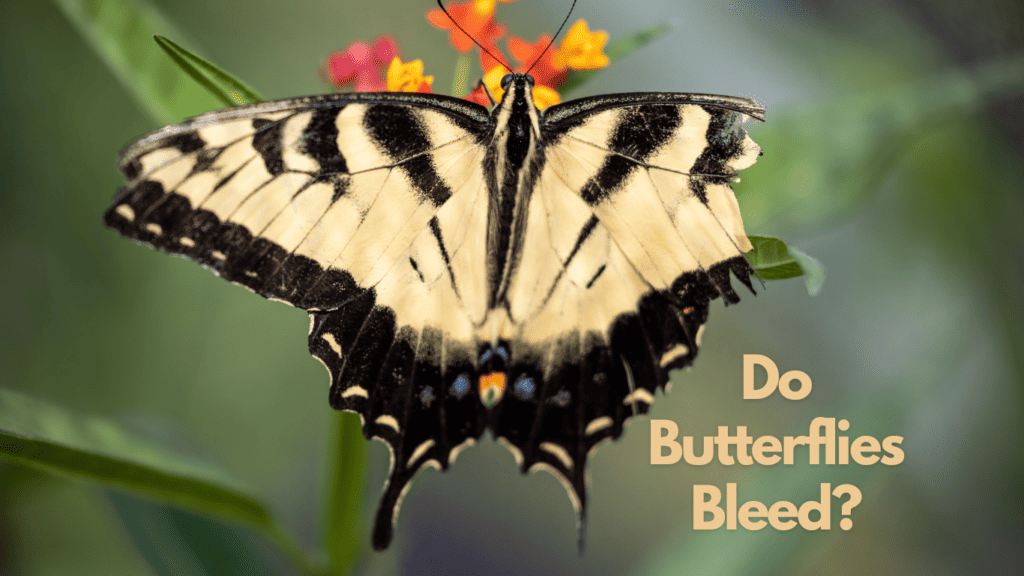
Many wonder if butterflies bleed, especially when they witness a seemingly red secretion from these delicate creatures. However, the answer is no. Butterflies do not possess blood in the same manner as humans or other animals. Instead, their bodies circulate a clear or slightly yellowish fluid known as hemolymph, which serves a purpose similar to blood in other creatures.
What can sometimes confuse observers is when a butterfly emerges from its chrysalis or cocoon. During this transformation, they release a substance called meconium, which has a red hue. While it might look alarming at first glance, this is not blood. It’s essentially a “pupal fluid” that the butterfly expels, clearing out waste stored in its body during metamorphosis. This phenomenon, although natural, often leads to the misconception that butterflies bleed.
Do Butterflies Bleed?
Butterflies do not have blood like humans. Instead, they have a fluid called hemolymph that fills their body cavity. This fluid is pumped by their heart and performs many of the same functions as blood. When butterflies suffer an injury, the damage caused to their body releases hemolymph, which can flow out through the exoskeleton if there is a puncture in it. This bleeding occurs as a reflex to the injury.
Red Liquid: Is It Blood?
The red liquid that seeps out of butterflies when they suffer an injury is not blood. It is hemolymph, which has a red tint. Hemolymph is not contained in vessels like blood is in humans. Instead, it is pumped through an open system that fills the body cavity. When a butterfly hatches from a chrysalis, it releases a red liquid known as meconium. Meconium is not blood but a waste product that is expelled from the digestive system.
Butterfly Anatomy and Physiology
The Circulatory System
Butterflies have an open circulatory system, which means that their blood, called hemolymph, is not contained within a closed system of vessels and arteries like in humans. Instead, the hemolymph flows freely throughout the body cavity and is pumped by the heart. The heart is a long tube that runs along the butterfly’s back and pumps the hemolymph forward towards the head.
The Immune System
Butterflies have an immune system that helps protect them from pathogens and infections. Their immune system is made up of cells and proteins that recognize and attack foreign invaders. The immune cells, called hemocytes, are found in the hemolymph and can engulf and destroy foreign particles.
The Nervous System
Butterflies have a relatively simple nervous system compared to humans. They have a brain and a ventral nerve cord that runs along the length of their body. The brain processes information from the butterfly’s senses, such as sight and smell, and sends signals to the muscles to control movement.
Butterflies and Pain
Can Butterflies Feel Pain?
Whether butterflies can feel pain is a topic of debate. While they do have a nervous system, it is much less complex than that of mammals, and they lack the specialized pain receptors found in vertebrates. However, recent studies have suggested that insects, including butterflies, may be capable of experiencing persistent pain after injury, similar to chronic pain in mammals.
Predators and Defense Mechanisms
Butterflies face a variety of predators, including birds, reptiles, and insects. To defend themselves, many species have developed unique defense mechanisms. Some butterflies have evolved to resemble toxic or unpalatable species, deterring predators from attacking them. Others have developed eye spots on their wings, which can startle predators and give the butterfly a chance to escape.
One particularly interesting defense mechanism is the ability of some butterflies to “bleed” when attacked. This bleeding is not true blood, but rather hemolymph, a clear fluid that circulates through the butterfly’s body. When a predator attacks, the butterfly may release hemolymph from its legs or wings, causing the predator to become distracted or repelled by the fluid.
Meconium: The Butterfly’s First Stool
When a butterfly emerges from its chrysalis, it expels a yellow-green substance known as meconium from its abdomen. Meconium is the leftover waste material from the caterpillar stage that was not needed to create the butterfly.
Unlike human stool, meconium is not made up of digested food. Instead, it is composed of various chemicals and compounds that were stored in the caterpillar’s body. These include leftover pigments, proteins, and other substances that were not used during metamorphosis.
Meconium is an important part of a butterfly’s emergence process. By expelling this waste material, the butterfly is able to rid itself of any unnecessary baggage from its previous life stage. This allows it to start fresh and begin its new life as an adult butterfly.
While meconium may look like blood to some observers, it is not. It is a completely natural and harmless substance that is essential to the butterfly’s development. In fact, the presence of meconium is a good sign that the butterfly has successfully completed its metamorphosis and is ready to begin its new life.
Frequently Asked Questions
How long do butterflies live?
The lifespan of a butterfly varies depending on the species. Some only live for a few days, while others can live up to a year. The average lifespan of a butterfly is about two weeks.
What do butterflies eat?
Butterflies feed on nectar from flowers. Some species also feed on tree sap, rotting fruit, and even animal dung.
How to tell if a butterfly is dying?
A dying butterfly may appear sluggish and have tattered wings. It may also stop moving altogether. However, it’s important to note that butterflies have a short lifespan, so what may appear to be a dying butterfly could simply be an old one.
What color is butterfly poop?
Butterfly poop, also known as frass, is usually brown or black. It can be found on leaves or other surfaces where butterflies have been feeding.
Does a butterfly have blood?
Yes, butterflies have a type of blood called hemolymph. It is not red like human blood, but rather a pale yellow or greenish color.
What is the red liquid after a butterfly hatches?
The red liquid that is sometimes seen after a butterfly hatches is called meconium. It is a waste product that is expelled from the butterfly’s body after it emerges from its chrysalis. It is not blood and does not indicate any harm to the butterfly.
Recent Posts
How Can I Create A Habitat For Skipper Butterflies In My Garden With 3 Easy Plants
Skipper butterflies are a diverse group of insects that are found all over the world. They are known for their quick, darting flight and their often colorful wings. Skippers are attracted to...
Common Species Of Butterflies In Maryland: 21 Unique Species
Maryland is home to a variety of beautiful butterflies, from the large and showy Eastern Tiger Swallowtail to the tiny and delicate Blue Dasher. There are over 150 species of butterflies in Maryland,...