
Checkered White Butterflies are a common sight in many parts of North America. They are small and delicate, with white wings that are checkered with black. These butterflies are often found in open areas, such as meadows and fields.
There are a few key features that can help you identify checkered white butterflies. First, the wings are always white with black markings. The black markings are usually in the form of checkerboard squares, but they can also be more irregular. Second, the butterfly is relatively small, with a wingspan of about 1-2 inches. Third, the checkered white butterfly has a long, thin body.
Here are some additional tips for identifying checkered white butterflies:
- Look for the black checkerboard markings on the wings.
- Note the size of the butterfly. It should be small, with a wingspan of about 1-2 inches.
- Look for the long, thin body.
What is Checkered White Butterflies?
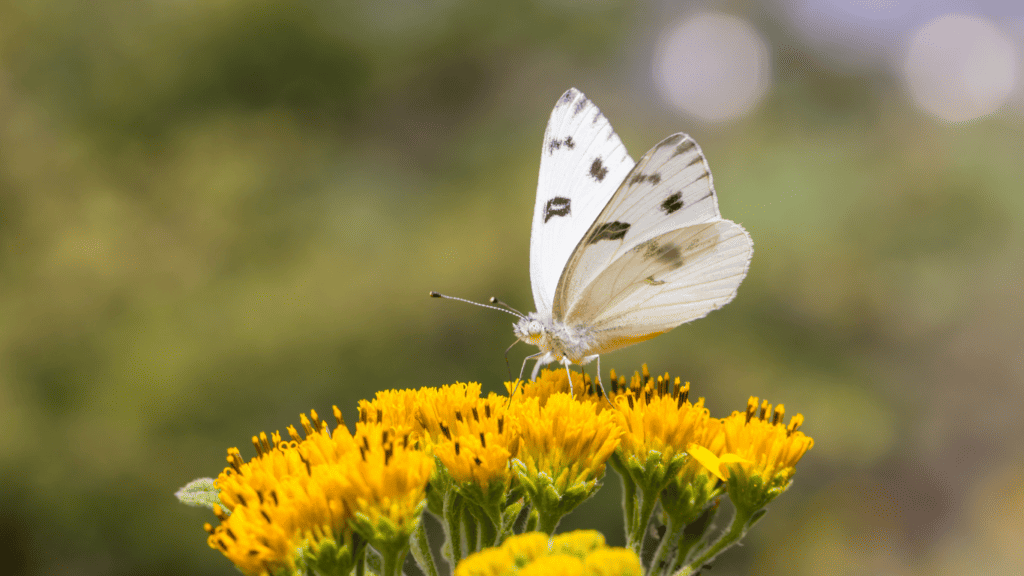
If you are interested in identifying butterflies, then you might have heard of the Checkered White butterfly. Checkered White is a species of butterfly that belongs to the Pieridae family. The scientific name of Checkered White is Pontia protodice. It is a common butterfly that is found in North America.
Checkered White butterflies are small to medium-sized butterflies that are mostly seen during the summer months in a wide variety of environments. They have a wingspan of about 1.5 to 2.5 inches. The male Checkered White has an almost entirely white wing, peppered with brown-black spots on the top half of his wing. The female Checkered White, on the other hand, has a more extensive pattern of black spots on her wings.
Checkered White butterflies are known for their distinctive checkered pattern on the underside of their wings. They have white wings with black borders and diamond-shaped black spots on the underside of their wings. The larvae of Checkered White butterflies are green and are a type of cabbage worm.
Physical Characteristics
Size and Wingspan
Checkered White butterflies are small to medium-sized butterflies with a wingspan of 1.25 to 2 inches. The average length of their wings is around 1.5 inches. The males and females have similar wingspan sizes, but the females are generally larger in size.
Color and Markings
When the wings are open, Checkered White butterflies display a checkered pattern in black or dark gray on the outer half of their forewings. The females have more markings than males, and their markings are rather brown than black, as also diffused. The hindwing of both sexes is white with gray markings. The wings’ underside is also white, with gray markings on the hindwings.
Sexual Dimorphism
The males and females of Checkered White butterflies can be easily distinguished by their markings. The females have more markings than males, and their markings are rather brown than black, as also diffused. Males have fewer markings than females, and their markings are black. The females are also generally larger in size than males.
Life Cycle of Checkered White Butterflies
Egg Stage
The life cycle of Checkered White Butterflies begins with the egg stage. The eggs are laid singly on the host plant, which is usually a member of the mustard family. The eggs are yellowish-green and are laid on the underside of the leaves. They are about 0.8 mm in diameter and are round in shape.
Caterpillar Stage
After hatching, the caterpillar emerges from the egg and begins to feed on the host plant. The larva or caterpillar has a greenish-yellow body with black stripes and spots. The head is black, and the body is covered with short hairs. The caterpillar grows to about 1.5 inches in length and molts several times during its development.
Chrysalis Stage
The chrysalis stage is the next stage of the life cycle. The caterpillar attaches itself to a stem or leaf of the host plant and forms a chrysalis. The chrysalis is green or brown and is about 0.75 inches long. The chrysalis stage lasts for about two weeks.
Adult Stage
The final stage of the life cycle is the adult stage. The adult Checkered White Butterfly emerges from the chrysalis and begins to mate and lay eggs. The adult butterfly has a wingspan of about 1.5 to 2 inches. The wings are white with black checkered patterns on the outer half of the forewings. The hindwings are also white. The female butterfly is more heavily patterned than the male, with brown markings on the wings.
Habitat and Distribution
Checkered white butterflies (Pontia protodice) are common North American butterflies found in a variety of habitats. They are distributed across the continent, from southern Canada to northern Mexico. In this section, we will discuss the habitat and distribution of checkered white butterflies in North America, Mexico, and Canada.
North America
In North America, checkered white butterflies can be found in a wide range of habitats, including fields, meadows, and gardens. They are most commonly seen during the summer months. Checkered white butterflies are known to feed on a variety of plants, including members of the mustard family (Brassicaceae) and the legume family (Fabaceae).
Mexico
In Mexico, checkered white butterflies are found in a variety of habitats, including open fields and meadows. They are most commonly seen during the summer months. Checkered white butterflies in Mexico are known to feed on a variety of plants, including members of the mustard family (Brassicaceae) and the legume family (Fabaceae).
Canada
In Canada, checkered white butterflies are found in a variety of habitats, including open fields and meadows. They are most commonly seen during the summer months. Checkered white butterflies in Canada are known to feed on a variety of plants, including members of the mustard family (Brassicaceae) and the legume family (Fabaceae).
Behavior and Habits
Flight Pattern
Checkered White butterflies are known for their quick and erratic flight patterns. They tend to fly low to the ground and move in a zigzag motion. Their flight is often compared to that of an excited child’s pulse. When they land, they usually rest with their wings closed, making it difficult to identify them.
Feeding Habits
Checkered White butterflies feed on nectar from a variety of flowers, including milkweeds, asters, and goldenrods. They are also attracted to sap and can often be found near trees that are oozing sap.
During the larval stage, Checkered White butterflies feed on the leaves of plants in the mustard family, including cabbage, broccoli, and radish. The larvae are green and blend in well with the leaves of the plants they feed on.
It is important to note that while Checkered White butterflies may be attracted to gardens with nectar-rich flowers, they may also lay their eggs on plants in the mustard family, which can be harmful to crops. It is recommended to plant a variety of nectar-rich flowers to attract a diverse range of butterflies and to monitor plants in the mustard family for signs of infestation.
Plant Hosts and Food Sources
Checkered White butterflies have specific host plants and food sources that they rely on for survival. Here are some of the most common ones:
Mustard Plants
Checkered White butterflies are known to use wild and weedy mustards like Poorman’s Pepperwort as host plants. They are also known to use cultivated mustard-family host plants like cabbage and broccoli. If you’re looking to attract Checkered White butterflies to your garden, consider planting these types of plants.
Cabbage
Cabbage is a common host plant for many butterfly species, including the Checkered White butterfly. The larvae of the Checkered White butterfly are a type of cabbage worm, and they feed on the leaves of cabbage plants. If you have a vegetable garden, you may be able to attract Checkered White butterflies by planting cabbage.
Flowers
Checkered White butterflies are attracted to a wide variety of flowers, including daisies, asters, and goldenrod. These flowers provide nectar for the adult butterflies, which they need for energy. If you want to attract Checkered White butterflies to your garden, consider planting these types of flowers.
Fruits
Checkered White butterflies are also known to feed on the juices of ripe fruits like oranges and grapefruits. If you have fruit trees in your yard, you may be able to attract Checkered White butterflies by leaving some of the ripe fruit on the ground for them to feed on.
By providing these types of host plants and food sources, you can help support the Checkered White butterfly population in your area.
Related Species
When identifying Checkered White butterflies in the wild, it is important to be familiar with related species. Here are a few species that are often mistaken for Checkered Whites:
Great Southern White
The Great Southern White (Ascia monuste) is a common butterfly found in the southern United States. It is similar in appearance to the Checkered White, but has more rounded wings and lacks the distinctive checkered pattern. The Great Southern White has a wingspan of 2.5 to 3.5 inches and is typically white with black markings on the tips of its wings.
Cabbage White
The Cabbage White (Pieris rapae) is another common butterfly found throughout North America. It is often mistaken for the Checkered White due to its similar size and coloration. However, the Cabbage White lacks the checkered pattern and has a more rounded wing shape. The wings are typically white with black markings on the tips.
Sulphurs
Sulphurs (genus Colias) are a group of butterflies found throughout North America. They are similar in size and coloration to the Checkered White, but lack the checkered pattern. Sulphurs have bright yellow or greenish-yellow wings with black markings on the tips. They are often seen in open fields and meadows.
It is important to note that the larvae of some of these species, including the Cabbage White and some Sulphurs, are also considered pests of crops. However, the Checkered White is not known to cause significant damage to crops.
Conservation Status and Abundance
Checkered white butterflies are sun-loving, nectar-drinking, and habitat generalists. However, their populations have declined dramatically over the past 50 years. The species is currently listed as a Species of Greatest Conservation Need in several states in the US, including Alabama, Georgia, and North Carolina.
According to the Alabama Butterfly Atlas, checkered whites were once common throughout the southeastern United States, but now they are considered rare. The main threats to their populations include habitat loss, pesticide use, and climate change.
If you want to help conserve checkered white butterflies, you can take several actions. First, you can support organizations that work to protect butterfly habitats, such as the Xerces Society for Invertebrate Conservation. Second, you can avoid using pesticides in your garden or yard. Third, you can plant native flowers that provide nectar for adult butterflies and host plants for their caterpillars.
It’s important to note that the abundance of checkered white butterflies can vary depending on the location and time of year. For example, in some areas, they may be more common during the spring and summer months. However, in other areas, they may be difficult to find due to their declining populations.
Identifying Checkered White Butterflies in the Wild
If you’re interested in identifying Checkered White Butterflies in the wild, you’ll need to learn about their distinctive features, common habitats, and how to distinguish them from similar species.
Distinctive Features
Checkered White Butterflies are small, with an average wingspan of 1.25-1.75 inches. They have a slow, yet erratic flight pattern. The wings of Checkered White Butterflies are primarily white, with black spots on each wing. Two stand-alone black marks on each wing sit near the center of the forewing. The one near the front edge of the wing has a thin white line in its center.
Two other black marks are connected to the black and white diamond-shaped border that spans the bottom of all four wings.
Common Habitats
Checkered White Butterflies can be found in a variety of habitats, including fields, meadows, gardens, and open woodlands. They prefer areas with plenty of sunlight and nectar-producing flowers. Checkered White Butterflies are most commonly found in the eastern United States.
Comparison with Similar Species
Checkered White Butterflies can often be confused with other white butterfly species, such as the Cabbage White and the Great Southern White. However, there are a few key differences to look out for. Checkered White Butterflies have black spots on their wings, while the Cabbage White has black spots and a black stripe on its forewings. The Great Southern White has a more muted coloration and lacks the distinctive black spots of the Checkered White Butterfly.
When trying to identify Checkered White Butterflies, it’s important to pay attention to their distinctive features, common habitats, and how they compare to other similar species. With a little practice, you’ll be able to confidently identify Checkered White Butterflies in the wild.
Frequently Asked Questions
What are some common habitats for checkered white butterflies?
Checkered white butterflies are commonly found in open areas such as fields, meadows, and gardens. They tend to prefer areas with plenty of sunlight and access to nectar-producing flowers.
How can you differentiate between male and female checkered white butterflies?
Male checkered white butterflies have a more distinct checkered pattern on their wings, with black markings on the outer half. Females, on the other hand, have a more heavily patterned wing, with brown markings that are more diffused. Additionally, the females are generally larger than the males.
What are some distinguishing features of checkered white butterflies?
Checkered white butterflies have white wings with dark grayish-blue spots. Their bodies tend to have a bluish coloration. They are small to medium-sized butterflies, with a wingspan ranging from 1.25 to 2 inches.
Where are checkered white butterflies typically found in the United States?
Checkered white butterflies are found throughout much of the United States, as well as parts of Canada and northern Mexico. They are most commonly found in the eastern and central regions of the United States.
What are some other types of white butterflies commonly found in the wild?
In addition to checkered white butterflies, some other common white butterflies found in the wild include cabbage white butterflies, giant white butterflies, and great spangled fritillary butterflies.
How can you identify a white butterfly with black markings?
There are several species of white butterflies with black markings, but one of the most common is the cabbage white butterfly. This butterfly has white wings with black markings on the tips of its forewings. Its body is also white with black spots.
Recent Posts
How Can I Create A Habitat For Skipper Butterflies In My Garden With 3 Easy Plants
Skipper butterflies are a diverse group of insects that are found all over the world. They are known for their quick, darting flight and their often colorful wings. Skippers are attracted to...
Common Species Of Butterflies In Maryland: 21 Unique Species
Maryland is home to a variety of beautiful butterflies, from the large and showy Eastern Tiger Swallowtail to the tiny and delicate Blue Dasher. There are over 150 species of butterflies in Maryland,...